Type 2 Charging Explained: The Plug, the Cables and What Fits Your Car
Type 2 is the one plug that fits every new EV in Australia. What it is, how CCS2 relates to it, when you need your own cable, and what cables cost.
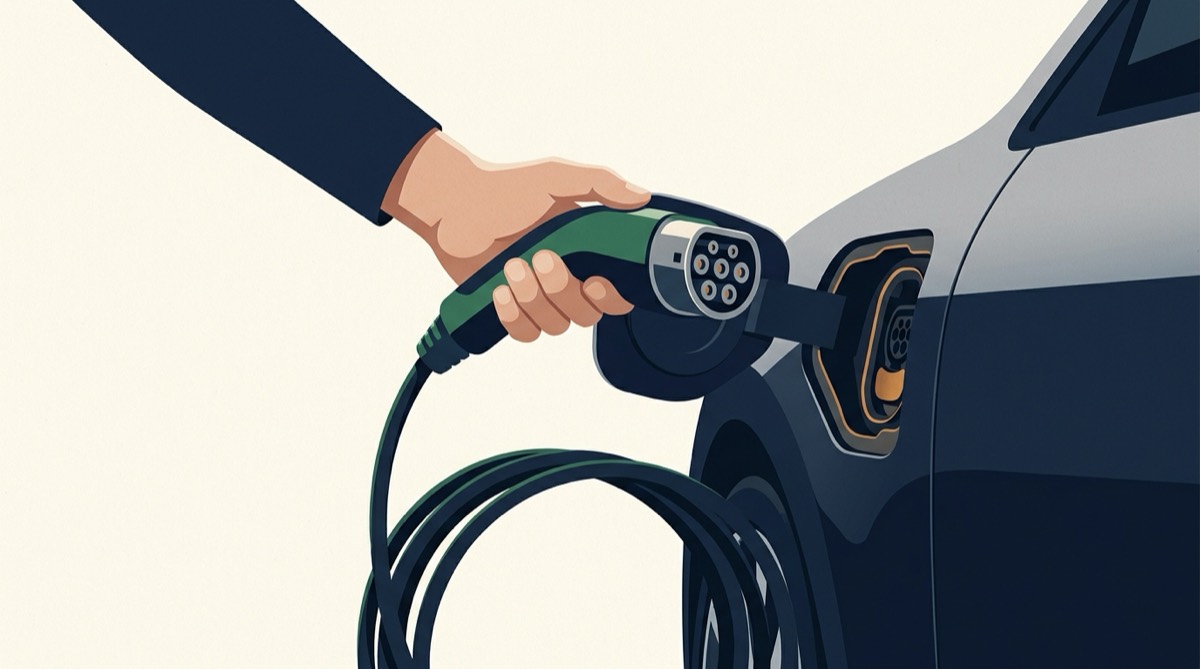
Type 2 is the round, flat-topped, seven-pin plug that every new EV sold in Australia uses for AC charging. When a wallbox, portable charger or public station is described as a “Type 2 charger”, that’s all it means: it ends in this connector, so it fits your car. The same shape hides inside the DC fast-charging standard too, which is why one port on the car handles everything. If you understand this one plug, Australian charging compatibility stops being confusing.
Once you’ve picked your car above, the AC and DC specs below are its own, not the market average.
What exactly is Type 2?
Type 2 (formally IEC 62196-2, sometimes called a Mennekes plug after the German company that designed it) is the European AC charging connector Australia adopted. Its seven pins carry up to three phases of AC power plus the communication line that lets the car and charger negotiate a safe charging rate before any power flows.
That negotiation matters more than the plug itself. A Type 2 connector on a charger might deliver anything from a trickle to 22 kW, but the car only ever draws what its onboard AC charger can convert. Pick your car above and here’s yours: 7.4 kW , out of a market range that runs from 6.6 kW to 22 kW. The plug fits either way; charging just runs at the lower of the two limits. Our home charger comparison covers what those limits mean when you’re buying hardware.
Type 2 vs CCS2: one port, two jobs
Pick your car above, and here’s your car’s DC fast-charging standard: CCS2 .
On almost every EV sold here, the charge port shows the Type 2 shape up top with two large extra pin slots below it. That full arrangement is CCS2 (Combined Charging System), the DC fast-charging standard.
- AC charging (home, destination chargers): the Type 2 plug clicks into the top section only.
- DC fast charging (highway sites): the bigger CCS2 plug uses the whole port, bypassing the car’s onboard charger to feed the battery directly. It is also the path bidirectional (V2G) chargers use; a Type 2 AC wallbox cannot send power back out.
Two legacy standards still float around: Type 1 (a smaller five-pin, single-phase AC plug) on some pre-2018 models and grey imports, and CHAdeMO (a separate DC plug) on older Nissan Leafs. Type 1 to Type 2 adapter cables exist for older cars, and our guide to EV plug types shows which cars use which. If that’s you, check site listings before relying on a fast charger, because networks are phasing CHAdeMO out. Our public charging guide covers the plug landscape at charging sites.
And yes: Australian-delivered Teslas use Type 2/CCS2 like everyone else. The North American situation, where Tesla runs its own connector, simply doesn’t apply here.
Tethered chargers vs BYO cable
Type 2 equipment comes in two forms, and this is where new owners get caught:
- Tethered: the cable is permanently attached, as on DC fast chargers, most home wallboxes and some destination chargers. Walk up, plug in.
- Socketed (BYO cable): the charger has a Type 2 socket and you supply the cable. Many AC destination chargers at shopping centres, hotels and council car parks work this way, as do some home units like the Fronius Wattpilot.
The practical rule: keep a Type 2 to Type 2 cable in the boot. Most new EVs come with one; if yours didn’t, it’s the single most useful accessory you can buy, alongside the portable charger that turns powerpoints into charging stations.
Buying a Type 2 cable
As of August 2026, Australian suppliers sell 5-metre cables for about $170 (single-phase 7kW) to $190 (three-phase 22kW), with 10-metre versions around $450. Three things worth knowing:
- Buy three-phase 22kW even if your car and home are single-phase. The premium is about $20, it’s backwards compatible with everything, and it won’t bottleneck a future car or a three-phase destination charger.
- Length is comfort. 5m covers most situations; go longer if you expect awkward public bays or a deep garage. Cable position at the bay matters more than you’d think.
- Buy certified. Stick to RCM-marked cables from established suppliers. The cable carries real current for hours at a time; it’s not the place for the cheapest import.
One thing a cable never changes is speed: it’s a passive link, and charging pace is set by the charger on one end and the car’s limits on the other. If your charging feels slow, the answer is in our charging time guide, not a different cable. And the cable should never be an extension: why the standard forbids Type 2 extension cables, and what to do instead, is in our extension cord guide.
Frequently asked questions
What is a Type 2 EV charger?
Type 2 is the round seven-pin plug that every new EV sold in Australia uses for AC charging, from a home wallbox, a portable charger or a public AC station. A "Type 2 charger" just means any charger with that connector, covering everything from a 2.3kW portable unit to a 22kW three-phase wallbox.
Are all EV charger plugs the same in Australia?
For new cars, effectively yes. Every new EV sold in Australia uses Type 2 for AC charging and CCS2 (which is Type 2 plus two DC pins in the same port) for DC fast charging. The exceptions are older vehicles: some pre-2018 models and grey imports use the five-pin Type 1 plug for AC, and older Nissan Leafs use CHAdeMO for DC.
Do Teslas use Type 2 in Australia?
Yes. Unlike North America, Australian-delivered Teslas use the same Type 2/CCS2 port as every other new EV here. Any Type 2 charger charges a Tesla, and a Tesla Wall Connector charges any Type 2 car, not just Teslas.
Do I need to carry my own Type 2 cable?
For many public AC chargers, yes: destination chargers at shops, hotels and car parks are often BYO-cable sockets. DC fast chargers always have their own tethered cable. Most new EVs include a Type 2 cable with the car; check your boot before buying one.
How much does a Type 2 charging cable cost?
As of August 2026, a 5-metre cable costs about $170 for single-phase 7kW or about $190 for three-phase 22kW from Australian suppliers, and longer 10-metre cables run around $450. Buy the 22kW version even for a single-phase car: it costs little more and works at full speed on any AC charger you'll meet.