Tesla Mobile Connector in Australia: What It Costs and Whether You Need One
Tesla's mobile charger no longer comes with the car. What the Mobile Connector costs, how fast it really charges, and whether you need one at all.
On this page
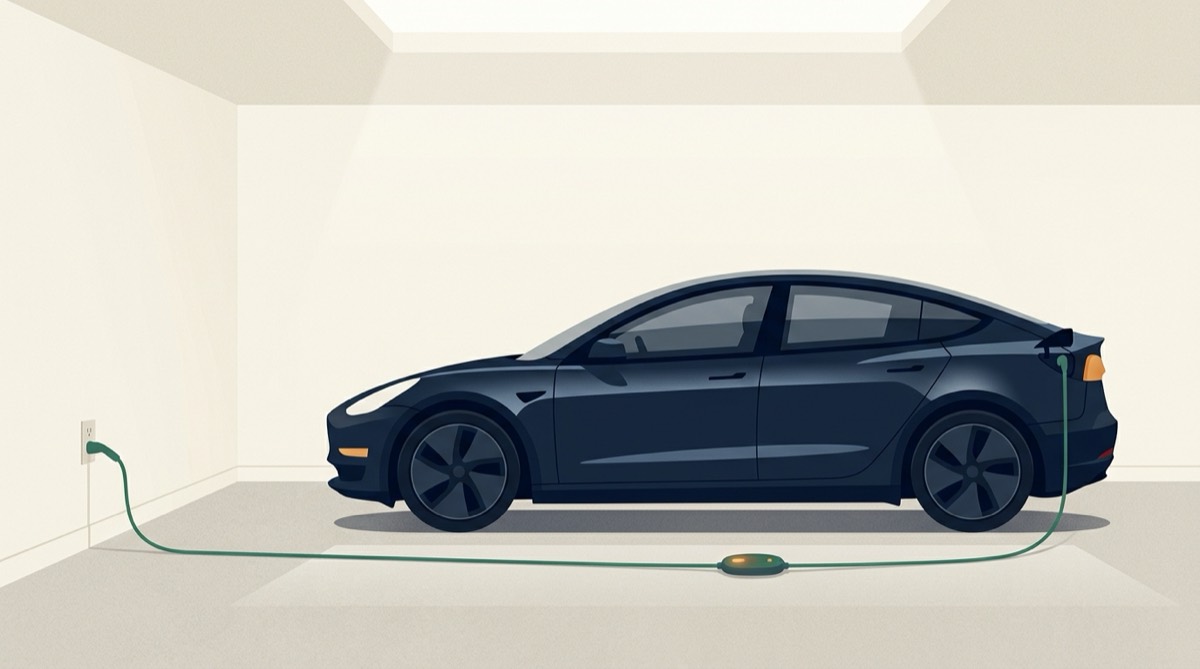
The Tesla Mobile Connector is Tesla’s version of the portable charger: a 6-metre cable with a control box that turns any ordinary powerpoint into a charging point for your car. It delivers about 2.2kW from a standard 10-amp socket, adding 10 to 15 kilometres of range per hour. The catch most buyers discover at the checkout: it no longer comes with the car. As of mid-2026 it is a separate purchase, around $350 to $400 from the Tesla shop.
What is the Tesla Mobile Connector, exactly?
It is Tesla’s take on the “granny charger” that most other manufacturers ship in the boot: a portable EVSE with the charging brains built into the cable. One end takes a swappable Australian plug adapter, the other plugs into your car’s Type 2 charge port. The control box manages the session and cuts power if anything looks wrong, exactly like the units we cover in our portable EV chargers guide.
The current Australian kit ships with two adapters: a standard 10-amp household plug and a 15-amp plug, the wider-earth-pin type found at caravan parks and on dedicated circuits. Third-party 32-amp adapter tails exist, but Tesla’s own Australian kit tops out at 15 amps, and anything beyond that puts you in aftermarket territory.
Why doesn’t a new Tesla come with one?
Tesla’s argument, when it stopped bundling the cable, was that most owners charge at home on a wallbox or use Superchargers, so the mobile cable was landfill for many buyers. Whatever you think of the reasoning, the practical consequence is real: a new Tesla arrives with no way to charge from a powerpoint until you spend roughly $350 to $400 more.
If you are buying your first EV, factor that in alongside the home charging decision. Plenty of new owners order the Mobile Connector with the car and use it as their only charger for months before committing to a wallbox, which is a perfectly sensible way to find out what your real charging pattern is before spending on installation.
How fast does it actually charge?
Slow, in a predictable and mostly livable way. Worked numbers for a Model Y with a roughly 60kWh usable battery:
| Socket | Power | Range added per hour | Overnight (10 hours) |
|---|---|---|---|
| 10A powerpoint | ~2.2kW | 10 to 15 km | 100 to 150 km |
| 15A socket | ~3.5kW | ~20 km | ~200 km |
| Wall Connector (32A) | up to 7kW+ | 40 to 50 km | full charge |
The average Australian car covers about 35 kilometres a day, so an overnight powerpoint charge replaces several days of typical driving. Where the maths falls apart is bigger daily distances or a battery you have run right down: from near empty, a full charge through the 10A adapter takes more than a day.
Is this the same as a mobile EV charging service?
No, and the naming causes genuine confusion. “Tesla mobile charger” gets used for three different things:
- The Mobile Connector: the cable you buy and carry. This page.
- Mobile charging services: vans run by motoring clubs and commercial operators that come to a stranded EV and add enough range to reach a charger. Covered in our guide to mobile EV charging in Australia.
- Tesla roadside assistance: the service bundled with the car. It arranges help but does not carry chargers, and out-of-charge towing is generally at your cost. Details in our Tesla roadside assistance guide.
The distinction matters when you run flat. A Mobile Connector only rescues you if you can limp to a powerpoint and wait; on a highway shoulder it is dead weight. What actually happens when the battery hits zero, and who tows you, is covered in what happens if your EV runs out of charge.
Mobile Connector or Wall Connector: which should you buy?
Different jobs. The Wall Connector is about $800 plus $400 to $700 for installation as of mid-2026, and charges three or more times faster. The Mobile Connector is a third of the money, needs no electrician, and moves house, or interstate, with you.
The honest decision tree:
- Renting, or unsure about your charging pattern? Mobile Connector first. Add the wallbox later if the powerpoint proves too slow.
- Own your home and drive daily? Wall Connector for the everyday, and the Mobile Connector becomes the road-trip and backup cable.
- Regional or long-distance driver? Both, plus consider a 15A adapter strategy: caravan parks and country pubs with 15A sockets become overnight charging stops.
Many owners end up with both, and the combination covers essentially every situation short of an actual roadside flat battery.
Does it work with other EVs, and what are the rules?
The car end is a standard Type 2 plug, the same connector every new EV in Australia uses, and owners do use Tesla’s cable on other brands. Tesla sells and supports it as a Tesla accessory, though, so treat cross-brand use as unofficial.
The safety rules are the same as for any portable EVSE: use healthy, properly wired sockets, skip domestic extension leads (Tesla’s manual prohibits them outright, and our extension cord guide explains the heat behind that rule), keep the control box dry and off the ground, and stop if a plug gets hot. Our portable charger guide covers the details, including why the socket, not the cable, is usually the weak link.
So is it worth $400?
For most Tesla owners, yes, grudgingly. It stings to pay extra for what used to be in the box, but the Mobile Connector is the cheapest insurance in the accessory catalogue: it makes every powerpoint in Australia a fallback charger, it defers the wallbox decision for new owners, and it earns its boot space on any trip beyond the fast-charging corridors. Buy it with the car, learn your charging pattern, then decide whether the Wall Connector is worth the upgrade. Just be clear-eyed about what it is not: if the battery reads zero on the roadside, the cable in your boot will not save you, and that job belongs to roadside assistance.
Frequently asked questions
What is the Tesla Mobile Connector?
The Tesla Mobile Connector is Tesla's portable charging cable: a 6-metre lead with a control box that plugs into an ordinary powerpoint at one end and your car's charge port at the other. With the standard 10-amp adapter it delivers about 2.2kW, adding roughly 10 to 15 kilometres of range per hour.
Does a new Tesla come with a mobile charger in Australia?
No. Tesla stopped bundling the Mobile Connector with new cars, so it is a separate purchase from the Tesla shop, around $350 to $400 as of mid-2026. The kit includes the connector, a 6-metre cable, and both 10-amp and 15-amp Australian plug adapters.
How fast does the Tesla Mobile Connector charge?
From a standard 10-amp powerpoint, about 10 to 15 kilometres of range per hour, or roughly 100 to 150 kilometres overnight. With the included 15-amp adapter and a 15-amp socket, around 20 kilometres per hour. That covers typical daily driving but is far slower than a Wall Connector or any public charger.
Will Tesla send a mobile charger if I run out of charge?
No. Tesla roadside assistance will help arrange a tow if you run flat, but out-of-charge rescue is not a financially covered service, and Tesla does not operate mobile charging vans. In some cities a motoring club van can deliver a roadside top-up to a Tesla; otherwise expect a flatbed tow to a charger.